Kitchen Exhaust Cleaning in Sudbury
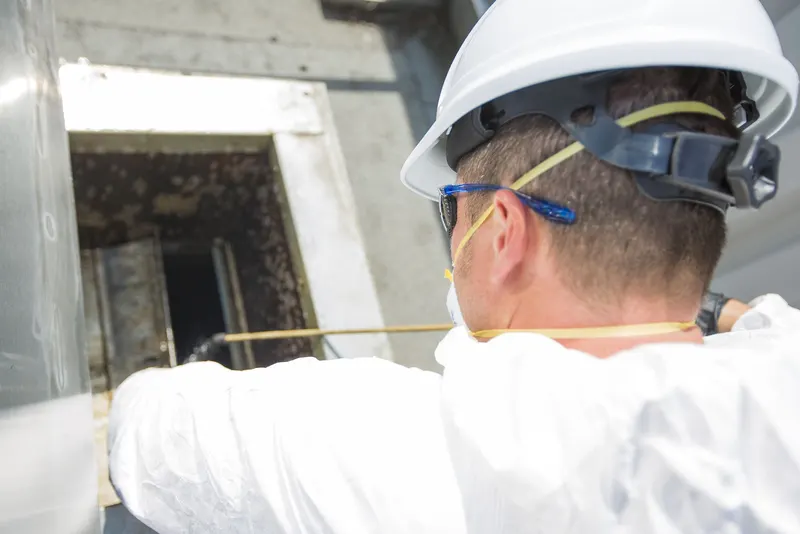
Kitchen Exhaust Cleaning in Sudbury is the cleaning of the grease duct that carries cooking air from the hood to the rooftop fan: the horizontal run above the ceiling, the riser that climbs through the building, and the access panels that open each section. Sudbury Commercial Hood Cleaning opens the duct at every panel, cleans each reachable section to bare metal, and checks grease depth along the whole path, not at the hood alone. Every section cleaned is photographed before and after and named on a signed certificate referencing the published NFPA 96 standard.
Duct run, riser and access panels: what kitchen exhaust cleaning reaches
Past the hood, the grease path has three parts, and each one loads in its own way.
The horizontal run leaves the top of the hood and travels above the ceiling toward a shaft or an outside wall. The air slows as it travels, so grease drops onto the floor of the duct. It also piles up on the outer wall of every bend, where the airstream hits the metal.
The riser is the vertical section that climbs to the roof fan. Grease that condenses on its walls runs back down and pools at the bottom where the riser turns. Looking down from the roof, a riser can seem clean while its base holds the thickest layer.
Access panels are sealed, removable doors in the duct wall. They are the only way into a section. A section with no panel cannot be cleaned or measured, so it goes on your record as not reached, with the reason. The hood itself is covered on the commercial hood cleaning page, and the roof fan on the exhaust fan repair page.
Hood-only vs full-system kitchen exhaust cleaning in Sudbury
The two scopes look alike on the invoice. They read very differently when an inspector or insurer asks for the record.
| The question on the record | Hood-only vs full-system: the hood-only answer | The full-system answer |
|---|---|---|
| Was the duct above the ceiling opened? | No. The opening at the top of the hood was wiped from below. | Yes, at every panel, with a photograph inside each section. |
| Was the base of the riser cleaned? | Not reached. | Yes. The pooled grease at the turn is scraped out and photographed. |
| Where was grease depth checked? | In the hood only. | Along the whole path, from the collar to the fan inlet. |
| What does the certificate name? | The hood. | Each section cleaned, and each section not reached, with the reason. |
The published cleaning intervals and what the certificate asserts are on the NFPA 96 guide.
Kitchen exhaust cleaning services in Sudbury for plazas and older buildings with a shared riser
Sudbury Commercial Hood Cleaning records each kitchen branch up to the junction and quotes the shared riser to whoever owns the building.
Some strip plazas and older downtown buildings vent more than one kitchen into a single riser. Each tenant books its own hood and holds its own certificate. The riser above loads from every kitchen, and often nobody has booked it.
The split is written down before the crew arrives. Each unit owns its hood and its branch of duct up to the point where it joins the riser. The riser and the fan usually belong to the building. Your certificate states where your branch ends. The riser quote goes to the landlord or property manager, with proof of WSIB coverage and liability insurance before work starts. If the owner declines, your record says so.
Where the 0.078 inch measurement is taken along a Sudbury duct run
NFPA 96 sets a grease deposit depth of 0.078 inches as the cleaning trigger. A full-system visit reads it along the whole path.
Four points get checked on every full-system visit. The collar is where the airstream first slows. The outer wall of each bend is where grease gets thrown. The base of the riser is where everything above drains. The fan inlet is the last surface before the air leaves the building, and the one most often skipped.
A hood reading tells you nothing about these four points. That is why a hood-only record cannot answer a question about the duct.
Hood vent cleaning in Sudbury through a long northern winter
Cold weather changes where grease settles in a duct, and a Sudbury winter is long.
Cooking air leaves the hood hot and loaded with grease vapour. As it travels, it meets duct walls that pass through cold ceiling spaces, exterior walls and the roof. In a northern winter those walls stay cold for months. The vapour cools on contact and condenses on the metal, well before it reaches the fan.
The result is grease that sets on the sections closest to the cold: long horizontal runs near an outside wall, and the upper riser as it nears the roof. A kitchen that looked fine after the fall visit can carry a heavier layer in those sections by spring. The walk-through notes where your duct runs through cold space, and those sections get extra attention on every hood vent cleaning visit.
Where to find kitchen exhaust cleaning near me in Sudbury
Sudbury Commercial Hood Cleaning traces duct runs across the City of Greater Sudbury at one price list, and on scheduled route days in towns across the northeast.
Duct layouts vary across the city. A plaza unit on The Kingsway may share a riser. A kitchen in an older building near Elm Street downtown may run its duct a long way before it reaches a shaft. A camp or institutional kitchen may have several hoods feeding separate runs. Visits are booked around your service hours on scheduled route days. The town list is on the areas served page, and the kitchen types are on the who we serve page.
How much does kitchen exhaust cleaning cost in Sudbury in 2026?
Sudbury Commercial Hood Cleaning prices a single-hood kitchen up to ten feet from $585 per visit and a multi-hood kitchen of two to four canopies from $995 per visit. Mine site and camp, hotel, institutional and shared-riser systems are quoted after a free walk-through.
On a full-system job the duct sets the hours. Run length, the number of bends, riser height and usable panels all move the figure. Your written quote comes back within 24 hours of the walk-through.
Next step: call 705-302-1378 for the next route day, or request a written quote. Tell us whether your unit shares a wall with another kitchen and whether a duct panel has ever been opened. Every other service is on the hood cleaning services page.
Kitchen exhaust cleaning in Sudbury: frequently asked questions
What is the difference between kitchen exhaust cleaning and hood cleaning?
Kitchen exhaust cleaning covers the duct after the hood: the horizontal run, the riser and the access panels. Hood cleaning covers the canopy, filters and plenum. The certificate names only the sections that were cleaned.
Who pays for a shared riser in a plaza?
That depends on the lease, so check with the landlord or property manager before the walk-through. The riser and fan are shared parts of the building, and each tenant looks after its own hood and branch duct. The two are quoted separately so each party sees its own share.
How many access panels does a duct run need?
A duct run needs enough panels to reach every section: one near the collar, one at each change of direction, and one at the base of the riser. Runs that have never been opened often have one panel or none.
Is hood vent cleaning the same as kitchen exhaust cleaning?
Hood vent cleaning is another name people use for kitchen exhaust cleaning. Both mean the duct path from the hood to the roof. Ask for a full-system scope if you want the duct on your certificate.
Why does winter matter for a kitchen exhaust duct?
Cold duct walls make grease vapour condense sooner, so grease sets on the sections that pass through cold space. A long Sudbury winter gives it months to build up there, which the walk-through checks for.