Hood Cleaning for Restaurants, Camps and Commercial Kitchens in Sudbury
Restaurant Hood Cleaning in Greater Sudbury is the scheduled removal of grease from the canopy, filters, duct and rooftop fan of a commercial kitchen, finished with a signed certificate and photographs. Sudbury Commercial Hood Cleaning works for six kinds of kitchen: independent and franchise restaurants, mine site and remote camp kitchens, hotels and lodges, healthcare kitchens, school and campus cafeterias, and community halls. Each one loads its exhaust system differently. Each one also hands the certificate to a different reader, from a fire inspector to an insurer, a camp manager or a volunteer board.
The kitchen sets the interval, not the address
A pizza oven on The Kingsway and a camp kitchen past the end of the pavement vent through the same kind of system. What differs is the hours, the menu and who asks for proof. The full frequency table is on the NFPA 96 page.
Where to find restaurant hood cleaning near me in Sudbury
Independent restaurants, franchise kitchens and food trucks are served across the city, from Regent Street to Chelmsford.
What the kitchen does to the system. A family restaurant or a fish and chip shop runs fryers most of the day. A wok or shawarma line pushes heavy vapour off high heat. A burger franchise charbroils. Charbroiling and wok cooking both sit in the high-volume row of NFPA 96, which points to a quarterly clean. A quieter diner may sit on the semi-annual row.
Franchise kitchens and food trucks. Head office often sets a franchise interval and wants the certificate filed the same way everywhere. A food truck with a hood has a short run in a small box, cleaned before the season starts.
What the paperwork needs. The fire inspector and the insurer want the signed certificate and photographs. The canopy method is on the commercial hood cleaning page.
Mine site, industrial and remote camp kitchens
Camp kitchens are the most demanding kitchens in the North, and the hardest to reach.
What the kitchen does to the system. Greater Sudbury is a mining city, and remote catering serves mining and exploration camps across Northern Ontario. A camp kitchen feeds workers on rotational shifts, and many cook around the clock. That is the 24-hour case in NFPA 96, the high-volume row, which points to a quarterly clean. The fans rarely stop, so grease builds fast.
Getting in is the hard part. A mine site has a gatehouse, a sign-in and often a site orientation before any ladder goes up. Some camps sit at the end of remote roads. Some open only for a season, so the clean lands before the first crew arrives.
Scheduling around shift change. A camp kitchen cannot close for a day, so the visit fits the gap at a shift changeover on a scheduled route day. What to have ready for the gate is on the contact page.
What the paperwork needs. The site safety office wants proof of WSIB coverage and liability insurance before work starts. The camp manager, caterer and insurer want the signed certificate and photographs. Camp systems are quoted after a free walk-through.
Hotels, resorts and lodges
What the kitchen does to the system. A hotel kitchen may run several canopies, and one can reach the grease limit while another sits below it. A lakeside resort or lodge cooks hard all summer, then goes quiet.
The pre-season clean. A seasonal lodge is best cleaned before opening, so the season starts on a clean system with a fresh certificate on file. Pairing that visit with a kitchen deep clean covers the line as well as the hood.
What the paperwork needs. The general manager and the insurer want certificates and photographs grouped by canopy.
Hospital, clinic and residence kitchens
What the kitchen does to the system. A hospital or residence kitchen serves every day of the year. Baking and steaming add less grease per hour than a fryer, but run time adds up. A clinic kitchen is smaller and lighter.
What the paperwork needs. The facilities lead answers to the fire inspector, the insurer and a board, so each certificate is dated, signed and filed with photographs.
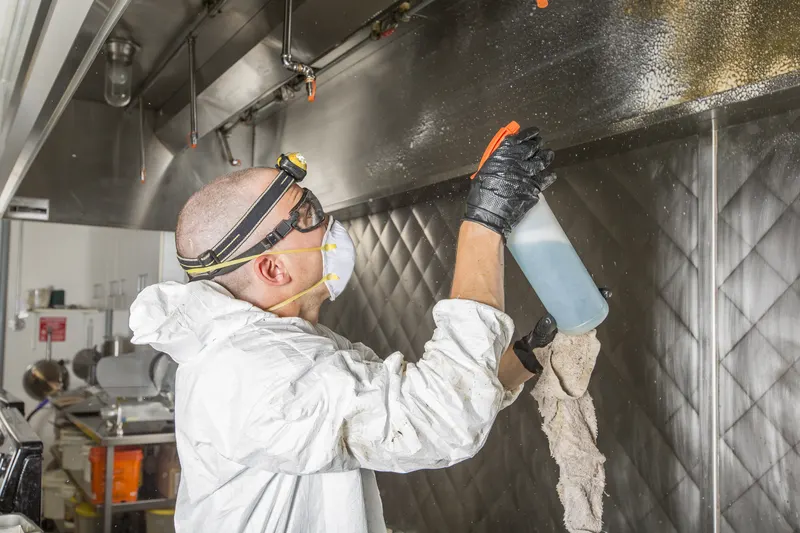
College, school and campus kitchens
What the kitchen does to the system. Greater Sudbury is a college and university city, with Laurentian University, Cambrian College on Barrydowne Road and Collège Boréal on Lasalle Boulevard. Campus and school cafeterias across the city run hard through the term and stop for the summer. Grease left in the canopy sits all break.
What the paperwork needs. A facilities department wants the certificate dated before term starts, photographs filed by building, and insurance proof on record before a contractor arrives. The summer break is the natural window for the visit.
Legions, halls, churches and non-profits
What the kitchen does to the system. A Legion branch, church hall or community kitchen cooks for events and fundraisers: the low-volume kitchens in the annual row of NFPA 96.
What the paperwork needs. A volunteer board and the insurer want one signed certificate a year, and a written quote to approve first.
Segment vs system load in Greater Sudbury
Six kinds of kitchen, one standard. The load and the reader of the certificate change.
| Segment vs system load | What the kitchen does to the system | What the paperwork needs |
|---|---|---|
| Restaurants and food trucks | Fryers, woks and charbroilers; often the quarterly row. | Certificate and photographs for the fire inspector, insurer and head office. |
| Mine site and camp kitchens | Rotational shifts, often 24-hour cooking; the quarterly row. | WSIB and insurance proof at the gate, certificate for the site and caterer. |
| Hotels, resorts and lodges | Several canopies loading unevenly; seasonal peaks. | Certificate by canopy, dated before the season opens. |
| Hospitals, clinics and residences | Every day of the year; run time loads the system. | Dated, signed certificate for the board, insurer and audit file. |
| Schools and campuses | Heavy through term, idle over the summer. | Certificate dated before term, photographs filed by building. |
| Legions, halls and churches | Event cooking; usually the annual row. | One signed certificate a year for the board and insurer. |
The duct run is covered on the kitchen exhaust cleaning page and the rooftop fan on the exhaust fan page.
How much does restaurant hood cleaning cost in Sudbury in 2026?
Restaurant hood cleaning in Sudbury starts from $585 per visit for a single-hood kitchen up to ten feet and from $995 per visit for a multi-hood kitchen of two to four canopies. Mine site and camp, hotel, institutional and shared-riser systems are quoted after a free walk-through, with a written quote back within 24 hours of it.
The segment changes how many visits a year you need, not the price of one visit. The hood cleaning services page matches a problem to the right service, and the towns on the route are on the areas served page.
Next step: call 705-302-1378 or request a written quote. Say what kind of kitchen it is and who reads the certificate, and ask for the next route day.
Who we serve in Greater Sudbury: frequently asked questions
How often does a restaurant in Sudbury need hood cleaning?
Restaurant hood cleaning frequency depends on the cooking. NFPA 96 puts charbroiling, wok and 24-hour kitchens on a quarterly schedule and moderate-volume kitchens on a semi-annual one.
Do you clean kitchens on mine sites and remote camps?
Yes. Mine site, industrial and remote camp kitchens are served on scheduled route days, planned around shift changes, gate sign-in and site orientation. Proof of WSIB coverage and liability insurance goes to the site before work starts, and each camp system is quoted after a free walk-through.
When should a seasonal lodge or resort book its hood cleaning?
A seasonal lodge or resort is best cleaned before opening, so the certificate is current for the insurer. Call 705-302-1378 for the next route day before your opening date.
What paperwork does a clinic or residence kitchen receive?
A clinic or residence kitchen receives a signed health and safety certificate that references the published NFPA 96 standard, plus before-and-after photographs of every cleaned surface. The certificate is dated, so a facilities lead can file it for the board, the insurer and the fire inspector.
Does a Legion hall or church kitchen need hood cleaning every year?
A Legion hall or church kitchen that cooks only for events usually sits on the annual row of NFPA 96. A hall that fries every week can load faster, so the walk-through checks the real grease depth before the schedule is set.